
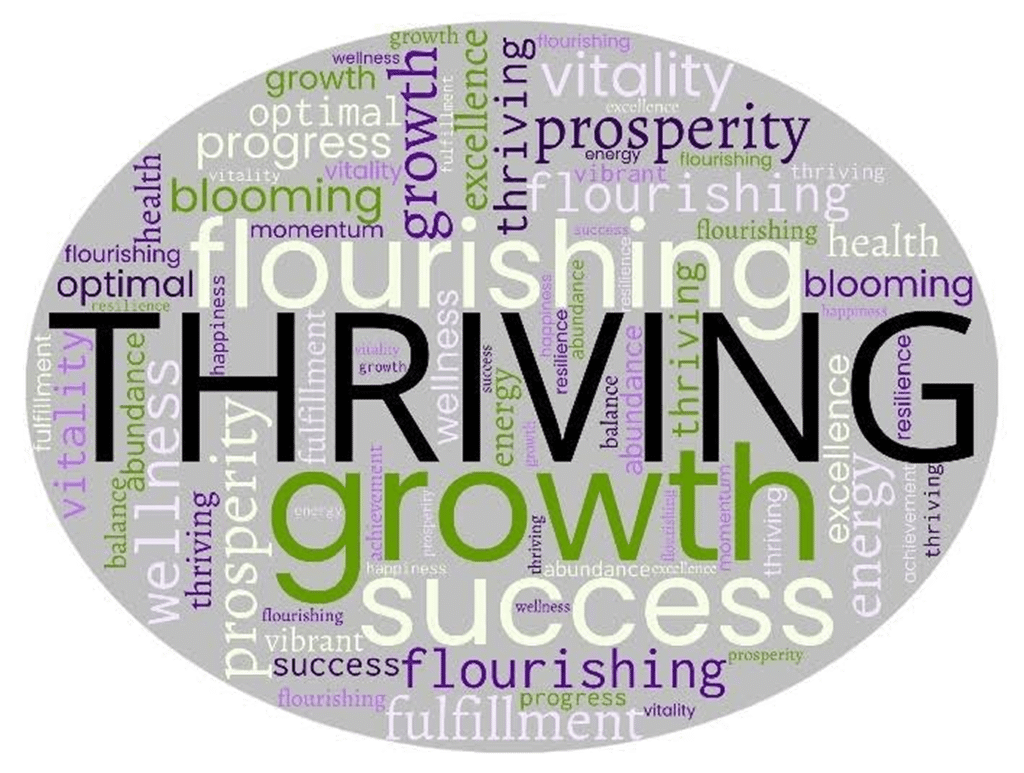
The term ‘thriving’ is an unabashedly positive term used to describe individuals, systems, communities, even economies. In all these contexts, thriving implies a continued state of well-being, sustainability and positive growth. Definitions of thriving range from simple to complex. A word cloud generated from mainstream news sources is my preferred way to show the dynamic complexity of this concept, reinforcing the connections across levels:
Thriving communities need thriving youth.
Thriving youth need thriving ecosystems.
Thriving ecosystems need thriving systems.
Thriving systems need thriving communities.
The term thriving appears frequently in statements about the renewed purpose of education (e.g., Portrait of a Graduate statements) that build on the emergent principles from the science of learning and development and the science of adolescence. It is also associated with a wide range of humanizing school practices that elevate the importance of social and emotional learning, student voice and choice, and opportunities to incorporate real-world learning and skill building into the school day.
AI has accelerated the timeline for moving from practice introduction to coherent system-level transformation. But the urgency is reinforced by surveys of educators, employers, community youth development leaders, parents and young people that affirm the learner-centered design principles. The good news is that the shift is happening. The bad news: It’s happening unevenly, taking hold fastest outside of public systems, fueled by private dollars.
So, the question becomes, how can we help public systems reimagine public education in support of youth thriving? Do we bet on the proliferation of alternative value networks associated with new models of learner-centered education (e.g. microschools) to disrupt the status quo? Do we take a page from juvenile justice and just begin to dismantle the system to force innovation? Do we wait for vouchers and AI-driven solutions to run their course?
Options to consider:
Widen the aperture. Envision a public education system in which schools maintain their core functions but work with the other systems in the learning ecosystem to ensure equitable future-ready learning environments with full-day, year-round, up to age 25 learning and development opportunities that build the competencies and connections that advance youth thriving (e.g., after school and summer programming, libraries and cultural institutions, service and conservation corps, youth employment and workforce development agencies).
Elevate the other systems in the learning ecosystem. These systems are not as large, visible or robust as schools and enrollment is voluntary. As a result, they are more flexible and customer-sensitive, frequently creating “hacks” to real infrastructure problems (e.g., transportation, assessment, staffing) that hamper school transformation efforts and contribute to higher satisfaction rates.
Use summer as a springboard. Expectations for learning and development are more flexible in the summer. Invite schools, community-based learning organizations, employment and workforce development organizations to work together to “saturate” the summer months with options, looking for ways to move successes into the school year.
Focus on teens and young adults who are still in the community. Acknowledge the neuroscience that affirms executive function development into the mid-twenties, even for adolescents who have experienced serious trauma and setbacks that have left them over-age and under-credentialed.
Invest in the mindset shifts needed to replace the grammar of schooling with the grammar of learning and development. School systems are closed ecosystems by design. Students are assigned to schools and grades, moving within the traditional walls of accountability that define the school day, school year, and attendance and graduation requirements. School leaders are aggressively modifying the rules to allow freer movement of their students and community partners in and out of the building. But they find it difficult to dismantle the systems of control.
Let’s look at three more word clouds.
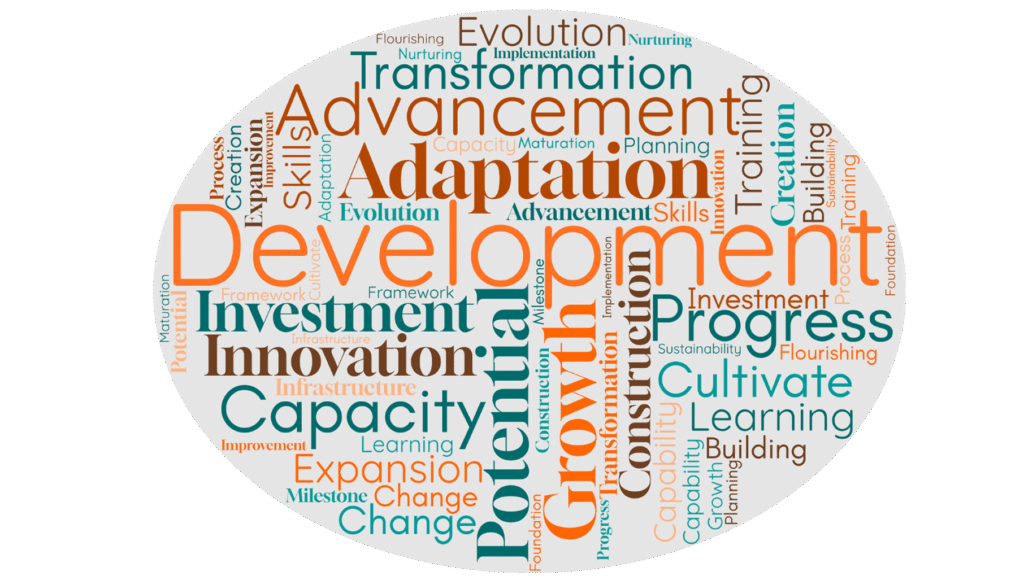
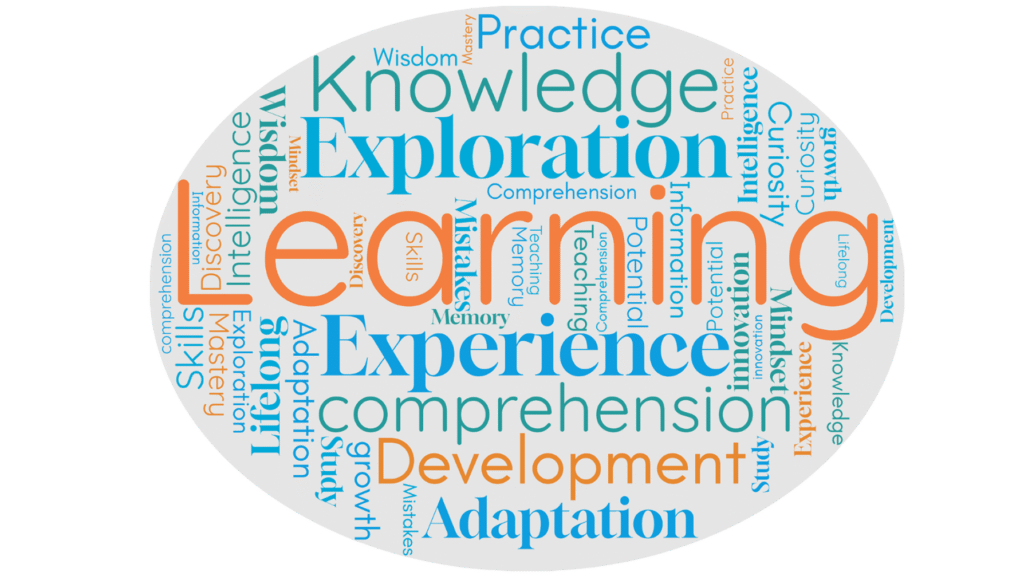
The words associated with development are positive, like thriving, but put more emphasis on the process (e.g., progress, advancement) that occurs individuals, systems and communities. The words associated with learning are much more specific and focused on the individual. They include words associated with the natural learning process (e.g., exploration, curiosity) and broad learning outcomes (e.g., skills, knowledge) as well as words associated the learning experience (including terms related to formal instruction
The words associated with education, however, have a different vibe. It’s not surprising to see terms like classrooms, bells, exams, textbooks, attendance, hallways, recess, subjects, lessons and grades. This is the language of schools shared by generations.
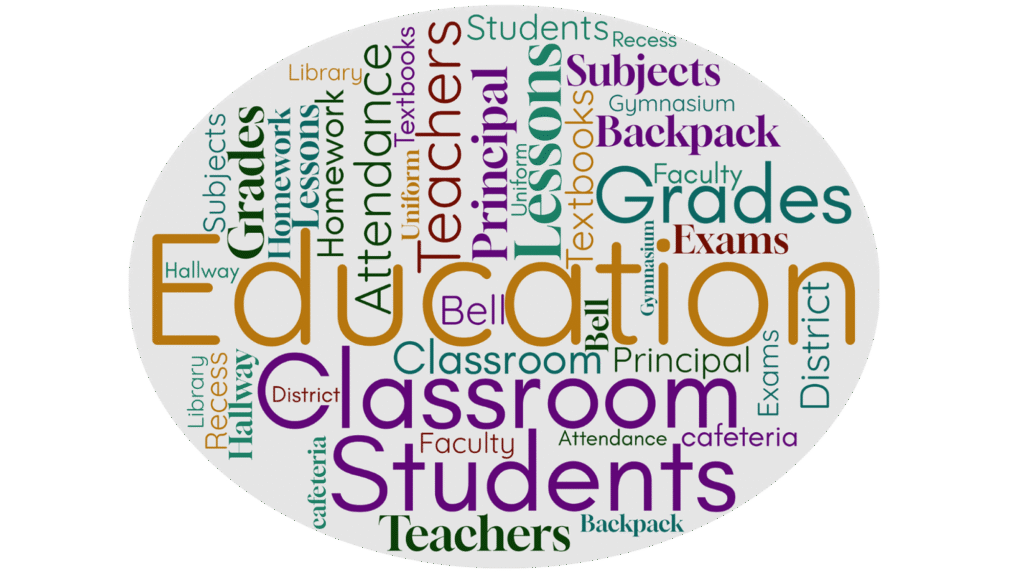
However, the absence of any words associated with learning, development or thriving is jarring. And it explains why, in most schools, learner engagement declines steadily with age (only 25% of high school students report being engaged) while learner’s anxiety about being ready for what comes next in life grows (80% of high school students feel unprepared for making choices about what comes after high school).
A Different Place to Start
Strengthen or create purpose-built learning ecosystem intermediaries. Every community has a learning ecosystem. Healthy, equitable ones, however, require careful stewardship. Ecosystem stewardship and system leadership require different mindsets, skill sets, strategies and, often home bases independent of the systems in the ecosystem. Look for organizations (usually non-profits) that have been purpose-built for ecosystem stewardship. In his talks, University of Pittsburgh learning ecosystem researcher Dr. Thomas Akva, explains their value:
“If we want to center youth thriving, we have to direct our efforts to understanding and shaping ecosystems. You need different tools to impact a web than those you use to impact an individual.”
Here are a few examples of non-profit intermediaries that have committed to ensuring adolescents are future ready, formalized their initiatives outside of the K-12 system to ensure the flexibility needed to work across system boundaries, but are actively working to partner with and create opportunities for educators in their districts linking them and their students to partners, trainings, resources, and certifications that enhance schooling for all.
- www.communityshare.org based in Tucson, AZ ignites a passion for learning and civic engagement by activating the wisdom, skill and lived experiences of educators, students and community members.
- www.pastfoundation.org based in Columbus, OH is a hub for innovation, connecting education, industry and diverse communities to problem solve the future of work and inspire lifelong learning..
- www.afterschoolmatters.org empowers teens across Chicago through paid after-school and summer opportunities to explore their passions, gain valuable skills, and build their futures through programs in the arts, communications, leadership, sports and STEM.
- www.heartoforegon.org empowers Central Oregon youth and young adults 16 -24 through employment, job training, education and service to Central Oregon communities providing stipends or credits and creating clear pathways to industry certifications and/or educational diplomas.