
LearnerStudio Presents:
The Brief But Spectacular Learning Series
Cultivating Agency, Relevance, & Purpose
These segments challenge the traditional industrial-age model of schooling, focusing on how we redesign the learning environment to center on student choice, mastery, and purpose.
Alan Cheng: The power of public schools
Public schools are one of the last shared civic spaces where young people of all backgrounds come together. But when schools define success by compliance, it limits the development of the agency that civic life demands. Alan Cheng argues schools must cultivate empathy, collaboration, and the belief that every young person can lead and shape their communities.
Big Picture Learning: Rethinking how we measure human potential
What if our schools have been asking the wrong question all along? Andrea Purcell believes every student is smart and capable, and that a ranked system of assessment was never designed to show us how. Through real internships, professional mentors, and community-connected learning, Big Picture schools are proving that when young people learn through what they love, they flourish. CLICK HERE to learn more.
LEAP Innovations: Reimagining public education to center engagement
What would it look like if school felt less like a factory and more like the most engaging and powerful learning experience? Andy Calkins is deeply engaged in the work of supporting schools as they move closer to that vision. In the Age of AI, developing these kinds of learning environments that spark curiosity and center human skill is more essential than ever. CLICK HERE to learn more.
Center for Innovation in Education: Co-creating the next generation of education systems
We talk a lot about “rolling out” change in education, which can often mean rolling it over people. As a champion of open leadership, Doannie Tran believes lasting change in education happens when communities are genuinely included in the design process from the beginning. His challenge to every leader is to find one thorny problem in your system and tackle it together with an unusually inclusive group. CLICK HERE to learn more.
Sora Schools: Redesigning school around purpose
“Traditional education still treats teenagers like elementary school students, an authority that says what’s best for you.” Students have started asking what else is out there, as Garrett Smiley did when he attended school in the 2010s. He responded by launching Sora Schools, a project-based school network that integrates new tools and technologies in the learning environment to create experiences that are more meaningful and relevant for young people. CLICK HERE to learn more.
From Our Original Brief but Spectacular Learning Series
One Stone: Students curating their own curriculum
At One Stone in Idaho, education is fundamentally reimagined. Young people choose their interests, and educators (known as guides) build a custom curriculum to meet them. By putting young people in real-world environments now, and seeing the impact they can have, this model flips the script – putting students squarely in the driver’s seat of their own education.¹ CLICK HERE to learn more.
Big Picture Learning: Real-world learning in action
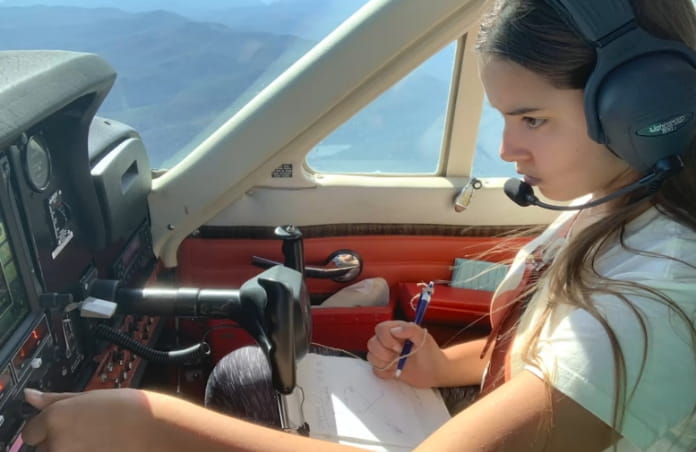
“I’m just waiting to finish high school so I can start living.” Big Picture Learning is flipping this model. In their approach, students spend time every week in the community – like an airplane hangar training to be aviation pros – working in their area of interest. Then, the curriculum is built around that passion. It’s real-world learning, recognized by new credentials like the IBPLC that validate skills, not just seat time.¹ CLICK HERE to learn more.
The Forest School: Learners as engines of their own learning
Are we graduating dependent learners? Tyler Thigpen argues the old model fails kids who are “listening to answers of questions they didn’t ask.” His solution? Building self-directed learning environments like The Forest School, where guides replace teachers and badges replace grades. This approach lets students struggle productively, connect learning to their calling, and build lifelong skills. CLICK HERE to learn more.
History Co:Lab: Inspiring the next generation of changemakers
Is education just creating “functional economic players?” Fernande Raine challenges this hyper-individualism, arguing that history and civics are essential to activate purpose. These learning experiences aren’t optional. When students connect the past to the present, they don’t just learn how we got here – they understand their role in shaping what comes next. CLICK HERE to learn more.
Building 21: Unleashing the power of competency-based learning
@Building 21 is part of a growing movement to shift from crediting courses to crediting competencies. Thomas Gaffey and Sandra Moumoutjis share their take on competency-based learning. This model shifts value from course credit to skills credit, like critical reading or collaboration. It gives students the space to build agency, connect learning to their passions, and redefine success. CLICK HERE to learn more.
Learner-Centered Collaborative: Designing learner-centered environments
Let go of standardization. Embrace learner agency. The Learner-Centered Collaborative says when students “think freely and move freely,” stressful schools become joyful learning communities. Centering learners by design helps both students and adults thrive. CLICK HERE to learn more.
¹These episodes were created in part of a series funded by XQ Institute, in collaboration with PBS NewsHour